Tuesday, 20 October 2020

Petition 2: Thy Kingdom Come

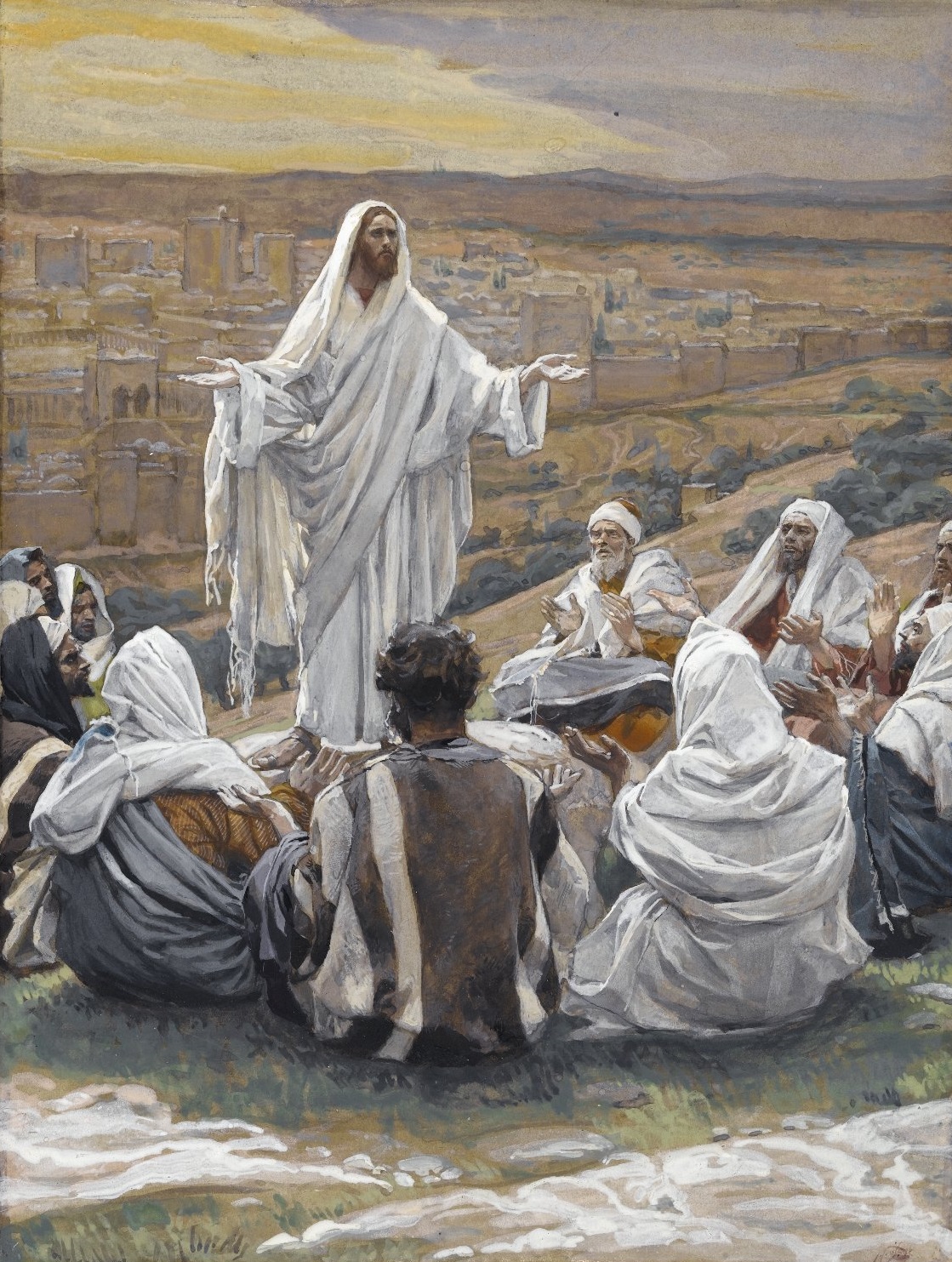
Lord, teach us how to pray... J-J Tissot.
We continue October's posts with the writings of St Thomas Aquinas on the prayers used in the Rosary. From the Angelic Salutation, we have shifted our focus to what he wrote on the Lord's Prayer. 

I have included my own (fairly literal) English translation, together with a number of Scriptural references and notes.


The footnote references follow each section.


Petition 2: Thy Kingdom Come

Articulus 2 : Adveniat regnum tuum

As it is said: the Holy Spirit enables us to love, desire and pray rightly; and He instills in us, firstly, fear through which we ask for the name of God to be sanctified. Another gift is that of piety; and piety is, strictly speaking, a gentle and devout love for the father and for any man who finds himself in trouble. Now since God is our Father, as is plain, we ought not only to reverence and fear Him but also to have a gentle and pious love for Him. This love makes us pray that the kingdom of God may come: “  we should live soberly, and justly, and godly in this world, looking for the blessed hope and coming of the glory of the great God.”[1]

Sicut dictum est, spiritus sanctus facit nos recte amare, desiderare et petere; et efficit in nobis primo timorem, per quem quaerimus quod nomen Dei sanctificetur. Aliud donum est donum pietatis. Et est proprie pietas, dulcis et devotus affectus ad patrem, et ad omnem hominem in miseria constitutum. Cum ergo Deus sit pater noster, ut patet, non solum debemus eum revereri et timere, sed etiam ad eum habere debemus dulcem et pium affectum. Hic autem affectus facit nos petere quod adveniat regnum Dei. Tit. II, 12-13: pie et iuste vivamus in hoc saeculo, expectantes beatam spem, et adventum gloriae magni Dei.

[1] Instructing us, that, denying ungodliness and worldly desires, we should live soberly, and justly, and godly in this world;  erudiens nos, ut abnegantes impietatem, et saecularia desideria, sobrie, et juste, et pie vivamus in hoc saeculo. Looking for the blessed hope and coming of the glory of the great God and our Saviour Jesus Christ, exspectantes beatam spem, et adventum gloriae magni Dei, et Salvatoris nostri Jesu Christi : [Titus ii. 12-13]

It may, however be asked: the kingdom of God has always been (in existence), so why do we pray that it may come?  Now this may be said (in answer), which may be understood in a threefold manner:

Because sometimes a king has only the right to a kingdom or dominion but actual dominion over his kingdom has not been declared, because men of the kingdom are not yet subject to him. His kingdom will accordingly appear first when men become subjects of his kingdom. Now, God is of Himself and by His nature Lord of all things; but Christ as God and as man has from God that He should be Lord of all things: “And he gave him power, and glory, and a kingdom:”[2] It is necessary therefore that all things be subject to Him. This has not yet come to be but it will be so in the end: “For he must reign, until he hath put all his enemies under his feet.”[3] And so we pray and say: “Thy kingdom come.”

Posset autem quaeri: regnum Dei semper fuit: quare ergo petimus quod veniat? Et ideo dicendum est, quod hoc potest tripliciter intelligi. Primo quia aliquando rex habet ius regni solum, seu dominii: et tamen nondum dominium ipsius regni est declaratum, quia nondum homines regni sunt ei subiecti. Tunc ergo apparebit primo eius regnum seu dominium, quando homines regni erunt sibi subiecti. Deus autem ex se et sua natura est dominus omnium: et Christus secundum quod Deus, et etiam secundum quod homo, habet a Deo quod sit dominus omnium. Dan. VII, 14: dedit ei potestatem et honorem et regnum. Oportet ergo quod sibi sint omnia subiecta. Hoc autem nondum est, sed erit in fine. I Cor. XV, 25: oportet illum regnare, donec ponat omnes inimicos sub pedibus eius. Et ideo petimus et dicimus: adveniat regnum tuum.

[2] And he gave him power, and glory, and a kingdom: and all peoples, tribes and tongues shall serve him: his power is an everlasting power that shall not be taken away: and his kingdom that shall not be destroyed. Et dedit ei potestatem, et honorem, et regnum : et omnes populi, tribus, et linguae ipsi servient : potestas ejus, potestas aeterna, quae non auferetur : et regnum ejus, quod non corrumpetur. [Dan. vii., 14]

[3] For he must reign, until he hath put all his enemies under his feet. Oportet autem illum regnare donec ponat omnes inimicos sub pedibus ejus. [I Cor. xv. 25]

Why we pray thus

In this is explained by three reasons: namely, so that the just may be converted, so that sinners may be punished and that death may be destroyed. For men are subject to Christ in two ways: either willingly or unwillingly. The will of God is so powerful that it must be complied with completely; and God wishes that all things should be subject to Christ. One of two things is necessary, namely: either man will do the will of God by subjecting himself to His commandments – this is what the just do; or God will do His will on all men by punishing them, and He will do this to sinners and to His enemies. This will be at the end of the world: “ Until I make thy enemies thy footstool.”[1]

Et hoc quantum ad tria: scilicet ut iusti convertantur, peccatores puniantur, et mors destruatur. Nam homines dupliciter subiiciuntur Christo: aut voluntarii, aut inviti. Cum enim voluntas Dei sit ita efficax quod oporteat penitus illam compleri, et Deus velit quod omnia subiiciantur Christo: alterum duorum erit necessarium: ut scilicet aut homo faciat voluntatem Dei subiiciendo se mandatis eius, et hoc facient iusti; aut Deus faciat de omnibus voluntatem suam puniendo eos, et hoc faciet peccatoribus et inimicis suis. Et hoc erit in fine mundi. Psal. CIX, 1: donec ponam inimicos tuos scabellum pedum tuorum.

[1] The Lord said to my Lord: Sit thou at my right hand: Until I make thy enemies thy footstool. Psalmus David. Dixit Dominus Domino meo : Sede a dextris meis, donec ponam inimicos tuos scabellum pedum tuorum. [Ps. cix. 1]


And so it is given to the faithful to pray that God’s kingdom may come, which is to say that they may totally subject themselves to Him; but it is a horrible thing for sinners, because for them to ask that God’s kingdom should come is nothing else than asking that they should be subjected to punishment. “  Woe to them that desire the day of the Lord:”[2] But it is from this that death is destroyed. Because Christ is “...the life,” death cannot exist in His kingdom, because death is contrary to life: “And the enemy death shall be destroyed last:”[3] And this will be at the resurrection: “Who will reform the body of our lowness, made like to the body of his glory.”[4]

Et ideo sanctis est datum quaerere quod adveniat regnum Dei, scilicet quod ipsi totaliter subiiciantur ei; sed peccatoribus est horribile, quia nihil aliud est quaerere quod adveniat regnum Dei, nisi quod de voluntate Dei subiiciantur poenis. Amos V, 18: vae desiderantibus diem domini. Sed et ex hoc destruitur mors. Cum enim Christus sit vita, non potest in regno eius esse mors, quae est vitae contraria: ideo dicitur I Cor. XV, 26: novissime autem inimica destruetur mors. Et hoc erit in resurrectione. Phil. III, 21 reformabit corpus humilitatis nostrae, configuratum corpori claritatis suae.

[2] Woe to them that desire the day of the Lord: to what end is it for you? the day of the Lord is darkness, and not light. Vae desiderantibus diem Domini! ad quid eam vobis? Dies Domini ista, tenebrae, et non lux. [Amos v. 18]

[3] And the enemy death shall be destroyed last: For he hath put all things under his feet. ... Novissima autem inimica destruetur mors : omnia enim subjecit pedibus ejus [I Cor. xv. 26]

[4] Who will reform the body of our lowness, made like to the body of his glory, according to the operation whereby also he is able to subdue all things unto himself. qui reformabit corpus humilitatis nostrae, configuratum corpori claritatis suae, secundum operationem, qua etiam possit subjicere sibi omnia. [Phil. iii. 21]


Secondly, the kingdom of heaven is said to the the glory of paradise. No wonder, for a kingdom is said to be nothing other than government. The best government, however, is where nothing is found contrary to the will of the ruler. Now the will of God is the salvation of men, for He wants men to be saved; and this will be most especially in Paradise, where there will be nothing contrary to the salvation of men: “They shall gather out of his kingdom all scandals.[5]  In this world, however, thereare many things contrary to the salvation of men. When, therefore, we pray”Thy kingdom come,” let us pray that we may be partakers of the heavenly kingdom and the glory of Paradise.

Secundo regnum caelorum dicitur gloria Paradisi. Nec mirum: nam regnum nihil aliud dicitur nisi regimen. Ibi autem est optimum regimen ubi nihil invenitur contra voluntatem regentis. Voluntas autem Dei est salus hominum, quia vult homines salvos fieri; et hoc potissime erit in Paradiso, ubi nihil erit saluti hominum repugnans. Matth. XIII, 41: auferentur de regno eius omnia scandala. In mundo autem isto sunt multa contra salutem hominum. Cum ergo petimus: adveniat regnum tuum, oramus, ut simus participes regni caelestis et gloriae Paradisi.

[5] The Son of man shall send his angels, and they shall gather out of his kingdom all scandals, and them that work iniquity. Mittet Filius hominis angelos suos, et colligent de regno ejus omnia scandala, et eos qui faciunt iniquitatem. [Matt. xiii. 41]

Why we desire this Kingdom

This kingdom is greatly to be desired on account of three reasons: 

    1. firstly, because of the perfect justice therein: “ And thy people shall be all just.”[1]  Here (in this world), the bad are intermingled with the good; but in heaven there will be no bad souls or sinners. 

    2. On account of its most perfect liberty: for here, there is no liberty although all men naturally desire it; but in heaven there will be every form of liberty and no form of servitude: “ Because the creature also itself shall be delivered from the servitude of corruption.”[2] And not only will everyone there be free, but they will be kings: “ And hast made us to our God a kingdom.”[3] The reason for this is because everyone will be of one will with God’ and God shall will whatever the saints will, and the saints shall will God’s will. Thus all shall reign because the will of all is done and the Lord will be the crown of everyone: “ In that day the Lord of hosts shall be a crown of glory and a garland of joy to the residue of his people: ”[4] 

    3. On account of the wondrous riches: “ The eye hath not seen, O God, besides thee, what things thou hast prepared for them that wait for thee;”[5] “Who satisfieth thy desire with good things:”[6] 

Quod quidem regnum est valde desiderandum propter tria. Primum propter summam iustitiam quae est in eo. Isai. LX, 21: populus tuus omnes iusti. Hic enim mali sunt mixti bonis; sed ibi nullus malus erit, et nullus peccator. Item propter perfectissimam libertatem. Hic enim non est libertas, quanquam omnes naturaliter desiderent eam; sed ibi erit omnimoda libertas contra omnem servitutem. Rom. VIII, 21: ipsa creatura liberabitur a corruptione. Et non solum erunt ibi omnes liberi, sed erunt reges: Apoc. V, 10: fecisti nos Deo nostro regnum. Cuius ratio est, quia omnes erunt eiusdem voluntatis cum Deo, et Deus volet quidquid sancti volent, et sancti quidquid Deus voluerit: unde cum voluntate Dei fiet voluntas eorum. Et ideo omnes regnabunt, quia omnium voluntas fiet, et dominus erit corona omnium. Isai. XXVIII, 5: in die illa erit dominus exercituum corona gloriae, et sertum exultationis residuo populi sui. Item propter mirabilem affluentiam. Isai. LXIV, 4: oculus non vidit, Deus, absque te, quae praeparasti expectantibus te. Psal. CII, 5: qui replet in bonis desiderium tuum.

[1] And thy people shall be all just, they shall inherit the land for ever, the branch of my planting, the work of my hand to glorify me. Populus autem tuus omnes justi; in perpetuum haereditabunt terram, germen plantationis meae, opus manus meae ad glorificandum. [Isai. lx. 21]

[2] Because the creature also itself shall be delivered from the servitude of corruption, into the liberty of the glory of the children of God. quia et ipsa creatura liberabitur a servitute corruptionis in libertatem gloriae filiorum Dei.[Rom. viii. 21]

[4] And hast made us to our God a kingdom and priests, and we shall reign on the earth. et fecisti nos Deo nostro regnum, et sacerdotes : et regnabimus super terram. [Apoc. v. 10]

[5] From the beginning of the world they have not heard, nor perceived with the ears: the eye hath not seen, O God, besides thee, what things thou hast prepared for them that wait for thee. A saeculo non audierunt, neque auribus perceperunt; oculus non vidit, Deus, absque te, quae praeparasti exspectantibus te. [Isai. lxiv. 4]

[6] Who satisfieth thy desire with good things: thy youth shall be renewed like the eagle's. qui replet in bonis desiderium tuum : renovabitur ut aquilae juventus tua. [Ps. cii. 5]


Note that man will find everything that he seeks in the world in God alone, but more excellently and more perfectly. If you seek delight, you will find the sublimest delight in God; if riches, there you will find such a sufficiency as to be accounted an abundance, and so on with whatever other things (you seek).  “When a soul leaves Thee and seeks outside Thee pleasures of the flesh, it does not find what is pure and clean until it returns to Thee.”[1] 

Et nota quod homo inveniet omnia in solo Deo excellentius et perfectius omni eo quod in mundo quaeritur. Si delectationem quaeris, summam invenies in Deo; si divitias, ibi omnem sufficientiam invenies, propter quam sunt divitiae; et sic de aliis. Augustinus, in Confess.: anima cum fornicatur abs te, quaerit extra te, quae pura et limpida non invenit, nisi cum redit ad te.

Finally, because sometimes in this world sin reigns. This is when a man is so disposed that he immediately follows and consummates a desire for sin. “ Let no sin therefore reign in your mortal body”:[2] but God must reign in thy heart; and this is when a man is prepared to serve God and to keep all His commandments. When, therefore, we pray that His kingdom may come, we pray that God may reign in our heart and not sin.

Tertio modo, quia aliquando in mundo isto regnat peccatum. Et hoc est quando homo est ita dispositus quod statim sequitur et prosequitur appetitum peccati. Apostolus, Rom. VI, 12: non ergo regnet peccatum in vestro mortali corpore: sed debet Deus regnare in corde tuo. Isai. VII, 7: Sion, regnabit Deus tuus. Et hoc est quando paratus est obedire Deo, et servare omnia mandata sua. Cum ergo petimus quod veniat regnum, oramus quod non regnet in nobis peccatum, sed Deus.

Through this petition, may we arrive at that blessedness of which it is said: “Blessed are the meek:”[3] for according to the first explanation (above),  from which man desires that God should be the Lord of all things, let him not seek revenge for injuries suffered but let him reserve that for God. For if you avenge yourself, you do not pray that His kingdom may come. Secondly, according to the second explanation, if you are waiting for His kingdom to come, namely the glory of Paradise, you should not worry if you lose earthly things. And, according to the third explanation, if you pray that God may reign in you, and Christ: because he was most meek, then you too ought to be meek: “learn of me, because I am meek;”[4] “and took with joy the being stripped of your own goods.”[5]

Per hanc autem petitionem perveniemus ad beatitudinem, de qua dicitur Matth. V, 4: beati mites: nam secundum primam expositionem, ex quo homo desiderat quod Deus sit dominus omnium, non vindicat se de iniuria sibi illata, sed reservat eam Deo. Nam si vindicares te, non quaereres quod adveniret regnum eius. Secundum vero secundam expositionem, si tu expectas regnum eius, idest gloriam Paradisi, non debes curare si perdis res mundanas. Item secundum tertiam expositionem, si tu petis quod Deus regnet in te et Christus; cum ipse fuerit mitissimus, et tu debes esse mitis. Matth. XI, 29: discite a me, quia mitis sum. Hebr. X, 34: rapinam bonorum vestrorum cum gaudio suscepistis.

[1] "Confessions," II, 6.

[2] Let no sin therefore reign in your mortal body, so as to obey the lusts thereof. Non ergo regnet peccatum in vestro mortali corpore ut obediatis concupiscentiis ejus. [Rom. vi. 12]

[3] Blessed are the meek: for they shall possess the land. Beati mites : quoniam ipsi possidebunt terram. [Matt. v. 4]

[4] Take up my yoke upon you, and learn of me, because I am meek, and humble of heart: and you shall find rest to your souls. Tollite jugum meum super vos, et discite a me, quia mitis sum, et humilis corde : et invenietis requiem animabus vestris. [Matt. xi. 29]

[5] For you both had compassion on them that were in bands, and took with joy the being stripped of your own goods, knowing that you have a better and a lasting substance. Nam et vinctis compassi estis, et rapinam bonorum vestrorum cum gaudio suscepistis, cognoscentes vos habere meliorem et manentem substantiam. [Hebr. x. 34]

Totus tuus ego sum
Et omnia mea tua sunt;
Tecum semper tutus sum:
Ad Jesum per Mariam.


Sunday, 18 October 2020

Petition 1: Hallowed Be Thy Name.

Lord teach us how to pray...J-J Tissot.
We continue October's posts with the writings of St Thomas Aquinas on the prayers used in the Rosary. From the Angelic Salutation, we have shifted our focus to what he wrote on the Lord's Prayer. 

I have included my own (fairly literal) English translation, together with a number of Scriptural references and notes.


The footnote references follow each section.


Petition 1: Hallowed Be Thy Name.

Articulus 1 Sanctificetur nomen tuum


This is the first petition, in which we ask that His name be manifested and declared in us.

Firstly, the name of God is wondrous because it works wonders in every creature: “ In my name they shall cast out devils: they shall speak with new tongues.  They shall take up serpents; and if they shall drink any deadly thing, it shall not hurt them:”[1]

Haec est prima petitio, in qua petitur ut nomen eius in nobis manifestetur et declaretur. Est autem nomen Dei primo mirabile, quia in omnibus creaturis mirabilia operatur: unde dominus in Evangelio Marc. ult., 17: in nomine meo Daemonia eiicient, linguis loquentur novis, serpentes tollent: et si mortiferum quid biberint non eis nocebit.

[1] And these signs shall follow them that believe: In my name they shall cast out devils: they shall speak with new tongues. Signa autem eos qui crediderint, haec sequentur : in nomine meo daemonia ejicient : linguis loquentur novis : They shall take up serpents; and if they shall drink any deadly thing, it shall not hurt them: they shall lay their hands upon the sick, and they shall recover. serpentes tollent : et si mortiferum quid biberint, non eis nocebit : super aegros manus imponent, et bene habebunt. [Marc. Ult. 17-18] 


God’s name is lovable

Secondly, the name is lovable: “There is no other name under heaven given to men, whereby we must be saved.”[2] But salvation is to be desired by all. Consider the example of Blessed Ignatius whoso loved the name of Christ that, when Trajan ordered him to deny the name of Christ, he replied that it could not be removed from his mouth; and when he was threatened with having his head cut off so as to remove the name from his mouth, he said: “If you remove it from my mouth, you will never be able to take it from my heart; and I shall not cease from invoking it.” Trajan, hearing this, wished to put it to the test; he had the servant of God beheaded and ordered his heart to be removed; it was found that he had the name of Christ written in letters of gold. He had placed this name on his heart like a seal.

Secundo est amabile. Act. IV, 12: non est aliud nomen datum sub caelo in quo oporteat nos salvos fieri. Salus autem est ab omnibus diligenda. Exemplum de beato Ignatio, qui intantum nomen Christi dilexit, quod cum Traianus requireret ab eo ut nomen Christi negaret, respondit quod de ore eius removeri non posset; et cum ille minaretur sibi caput abscindere, et Christum de eius ore removere, dixit: et si de ore abstuleris, nunquam tamen de corde eripere poteris: hoc enim nomen cordi meo inscriptum habeo, et ideo ab eius invocatione cessare non valeo. Quod audiens Traianus, et probari cupiens, servi Dei abscisso capite, cor eius extrahi iussit, et inventum est habens nomen Christi in se scriptum litteris aureis. Posuerat enim super cor suum hoc nomen quasi signaculum.

[2] Neither is there salvation in any other. For there is no other name under heaven given to men, whereby we must be saved. et non est in alio aliquo salus. Nec enim aliud nomen est sub caelo datum hominibus, in quo oporteat nos salvos fieri. [Acts iv. 12]

God’s name is venerable

Thirdly, it is venerable: “ In the name of Jesus every knee should bow, of those that are in heaven, on earth, and under the earth:[3]  those in heaven are the Angels and the blessed; those on earth are the people of this world who do this from love, in the hope of arriving at glory or from fear, fleeing punishment; and those that are under the earth to the damned, who do this from fear.

Tertio est venerabile. Apostolus, Phil. II, 10: ut in nomine Iesu omne genu flectatur, caelestium, terrestrium et Infernorum. Caelestium quantum ad Angelos et beatos; terrestrium quantum ad mundanos, qui hoc faciunt ex amore adipiscendae gloriae vel timore fugiendae poenae; et Infernorum quoad damnatos, qui hoc faciunt ex timore.

[3] That in the name of Jesus every knee should bow, of those that are in heaven, on earth, and under the earth: ut in nomine Jesu omne genu flectatur caelestium, terrestrium et infernorum. [Phil. ii. 10]

God’s name is ineffable

Fourthly, this name is ineffable, for every tongue is incaple of expressing it. It is, accordingly, explained through comparison to created things; whence it is compared to a rock, by reason of its firmness: “Upon this rock I will build my church;[4]  or to a fire, by reason of its purifying power: for just as fire purifies metal, so does God purify the hearts of sinners: “The Lord thy God is a consuming fire;[5] or to light, by reason of its enlightening power: for just as light illumines darkness, so does the name of God illumine the darkness of the mind: “ O my God enlighten my darkness.”[6] 

Quarto inexplicabile, quia a narratione eius deficiunt omnes linguae. Et ideo explicatur aliquando per creaturas. Unde dicitur lapis ratione firmitatis: Matth. XVI, 18: super hanc petram aedificabo Ecclesiam meam. Item ignis ratione purificationis: quia sicut ignis metalla purificat, ita Deus purificat corda peccatorum: unde Deut. IV, 24: Deus tuus ignis consumens est. Item lux ratione illuminationis: quia sicut lux illuminat tenebras, ita nomen Dei illuminat tenebras mentis. Psal. XVII, 29: Deus meus, illumina tenebras meas.

[4] And I say to thee: That thou art Peter; and upon this rock I will build my church, and the gates of hell shall not prevail against it. Et ego dico tibi, quia tu es Petrus, et super hanc petram aedificabo Ecclesiam meam, et portae inferi non praevalebunt adversus eam. [Matt. xvi. 18] 

[5] Because the Lord thy God is a consuming fire, a jealous God. quia Dominus Deus tuus ignis consumens est, Deus aemulator. [Deut, iv. 24]

[6] For thou lightest my lamp, O Lord: O my God enlighten my darkness. Quoniam tu illuminas lucernam meam, Domine; Deus meus, illumina tenebras meas. [Ps. xvii. 29]

Meaning of “Hallowed”

Whence we pray this name may be manifested so that it may be known and held to be holy. “Holy” may be said in three senses: (Firstly,) Holy is the same as firm; whence all the blessed who are in heaven are called saints (holy ones) because they are firmly established in eternal happiness. In this world, they cannot be saints (in this sense) because they are continually subject to change. “ I sank away, O Lord, from Thee,  and I wandered too far astray from Thee: I have left the path of thy firmness." [7]  

Unde istud nomen petimus manifestari, ut cognoscatur, et teneatur sanctum. Sanctum autem tripliciter dicitur. Sanctum enim idem est quod firmum: unde omnes beati qui in caelo sunt, sancti dicuntur, quia sunt aeterna felicitate firmati. In mundo non possunt esse sancti, quia sunt continue mobiles. Augustinus: defluxi, domine, a te, et erravi nimis: devius factus sum a stabilitate tua.

[7] Augustine: "Confessions," II, x.

Secondly, “hallowed” or “holy” is the same as “unearthly”: whence the saints who are in heaven have no desire for what is earthly: “I have suffered the loss of all things, and count them but as dung, that I may gain Christ:[8]  By “earth” may be indicated sinners. 

    1. Firstly, by reason of seed (in the earth): if the earth is not cultivated, it will produce thorns and thistles; similarly, the soul of the sinner, unless it is cultivated by grace, will produce only thorns and the prickings of sins: “Thorns and thistles shall it (the earth) bring forth to thee;”[9]  

    2. Secondly, by reason of its darkness: for the earth is dark and opaque; and the sinner is also dark and opaque: “Darkness was upon the face of the deep;”[10] 

    3. Thirdly, by reason of its condition: for the earth is a dry element which is scattered unless it is held together by the moisture of water: “Who established the earth above the waters:”[11]  because by the moisture of water is contained the dryness or drought of the earth. In such a way does a sinner have a soul that is dry and without moisture: “ My soul is as earth without water unto thee.”[12] 

Secundo sanctum idem est quod non terrenum: unde sancti qui in caelo sunt, nullum habent affectum terrenum: unde apostolus, Phil. III, 8: omnia arbitratus sum ut stercora ut Christum lucrifaciam. Per terram autem designantur peccatores. Primo ratione germinis: terra enim si non colitur, spinas et tribulos germinat; sic anima peccatoris, nisi colatur per gratiam, non germinat nisi tribulos et punctiones peccatorum. Gen. III, 18: spinas et tribulos germinabit tibi. Secundo ratione caliginis. Terra enim caliginosa est et opaca: sic etiam peccator caliginosus et opacus est. Gen. I, 2: tenebrae erant super faciem abyssi. Tertio ratione conditionis. Terra enim est elementum siccum, quod spargitur nisi contineatur ab aquae humiditate: nam Deus posuit terram super aquam, iuxta illud Psal. CXXXV, 6: qui firmavit terram super aquas, quia ex humiditate aquae continetur ariditas vel siccitas terrae. Sic peccator animam habet siccam et aridam, iuxta illud Psal. CXLII, 6: anima mea sicut terra sine aqua tibi.

[8] Furthermore I count all things to be but loss for the excellent knowledge of Jesus Christ my Lord; for whom I have suffered the loss of all things, and count them but as dung, that I may gain Christ: Verumtamen existimo omnia detrimentum esse propter eminentem scientiam Jesu Christi Domini mei : propter quem omnia detrimentum feci, et arbitror ut stercora, ut Christum lucrifaciam. [Philip. iii. 8]

[9] Thorns and thistles shall it bring forth to thee; and thou shalt eat the herbs of the earth. Spinas et tribulos germinabit tibi, et comedes herbam terrae. [Gen. iii. 18]

[10]  And the earth was void and empty, and darkness was upon the face of the deep; and the spirit of God moved over the waters. Terra autem erat inanis et vacua, et tenebrae erant super faciem abyssi : et spiritus Dei ferebatur super aquas. [Gen. i. 2]

[11] Who established the earth above the waters: for his mercy endureth for ever. Qui firmavit terram super aquas, quoniam in aeternum misericordia ejus. [Ps. Cxxxv. 6]

[12] I stretched forth my hands to thee: my soul is as earth without water unto thee. Expandi manus meas ad te; anima mea sicut terra sine aqua tibi. 


Thirdly, “hallowed” or “holy” may mean washed in blood; whence the saints in heaven are said to be holy because they are washed in blood: “ These are they who are come out of great tribulation, and have washed their robes, and have made them white in the blood of the Lamb.”[13]  And again: “(Christ) washed us from our sins in his own blood.”[14] 

Item tertio dicitur sanctum, idest sanguine tinctum; unde sancti qui sunt in caelo, sancti dicuntur, eo quod sunt sanguine tincti, iuxta illud Apoc. VII, 14: isti sunt qui venerunt ex magna tribulatione, et laverunt stolas suas in sanguine agni. Item ibid. I, 5: lavit nos a peccatis nostris in sanguine suo.

[13] And I said to him: My Lord, thou knowest. And he said to me: These are they who are come out of great tribulation, and have washed their robes, and have made them white in the blood of the Lamb. Et dixi illi : Domine mi, tu scis. Et dixit mihi : Hi sunt, qui venerunt de tribulatione magna, et laverunt stolas suas, et dealbaverunt eas in sanguine Agni. [Apoc. vii. 14]

[14] And from Jesus Christ, who is the faithful witness, the first begotten of the dead, and the prince of the kings of the earth, who hath loved us, and washed us from our sins in his own blood. et a Jesu Christo, qui est testis fidelis, primogenitus mortuorum, et princeps regum terrae, qui dilexit nos, et lavit nos a peccatis nostris in sanguine suo. [Apoc. I. 5]


Totus tuus ego sum
Et omnia mea tua sunt;
Tecum semper tutus sum:
Ad Jesum per Mariam.


Saturday, 17 October 2020

Who art in Heaven (Part 2 of 2)

Lord, teach us how to pray... J-J Tissot.
We continue October's posts with the writings of St Thomas Aquinas on the prayers used in the Rosary. From the Angelic Salutation, we have shifted our focus to what he wrote on the Lord's Prayer. 

I have included my own (fairly literal) English translation, together with a number of Scriptural references and notes.


The footnote references follow each section.


Who art in Heaven

The Philosopher says that. On account of the incorruptibility of heaven, all locate heaven as the place of spirits.[1] Through this, there are three ways in which the words “Who art in heaven” give us confidence in praying: by reason of God’s power, by reason of our being a member of the family of Him to Whom our prayer is addressed, and by reason of the fitness of our prayer.

Et philosophus dicit in I de caelo, quod propter incorruptionem caeli, omnes posuerunt caelum esse locum spirituum. Per hoc ergo quod dicitur, qui es in caelis, datur nobis fiducia orandi, quantum ad tria: quantum ad potestatem, et quantum ad familiaritatem eius a quo petitur, et quantum ad congruitatem petitionis.

[1] Aristotle, "De Coelo," 1.

For the power of Him to Whom we pray is implied if by “heaven” is understood the corporeal heavens; and yet He is not comprehended by corporeal space, since it is written: “Do not I fill heaven and earth?”[2] He is, however, said to be in the corporeal heavens to indicate two things:

    1.  namely, the power of His might and 

    2. the exaltedness of His nature. 

The first of these contradicts those who say that everything happens out of necessity from a fate determined by celestial bodies. According to this opinion, it would be useless to ask for something from God by praying. But this is foolish since God is in the heavens as Lord of the heavens and stars: “The Lord hath prepared his throne in heaven.”[3]  The second (his exalted nature) is to contradict those who, in their prayer, propose and fabricate for themselves corporeal ideas of God. Therefore, God is said to be “in heaven” so that, through this which is the highest of sensible things, His divine sublimity may be shown, exceeding all things, even the desire and intellect of men; whence it is that whatever can be thought or desired is less than God. On account of which, it is said:  “ God is great, exceeding our knowledge:”[4]  “The Lord is high above all nations;”[5]  “ To whom then have you likened God?”6

Potestas enim eius a quo petitur, insinuatur, si per caelos intelligantur caeli corporei: et quamvis ipse locis corporalibus non comprehendatur, cum scriptum sit Ier. XXIII, 24: caelum et terram ego impleo, tamen dicitur esse in caelis corporeis ad insinuandum duo: scilicet potentiae eius virtutem, et sublimitatem naturae. Primum quidem est contra illos qui dicunt, omnia ex fato caelestium corporum ex necessitate accidere: secundum quam opinionem inutile esset aliquid a Deo orando petere. Sed hoc stultum est, cum Deus in caelis sic esse dicatur ut caelorum dominus et stellarum, secundum illud Psal. CII, 19: dominus in caelo paravit sedem suam. Secundum vero contra illos est qui in orando aliquas sibi corporeas phantasias de Deo proponunt et fingunt: ideo dicitur esse in caelis, ut per id quod in sensibilibus rebus est altissimum, ostendatur divina sublimitas omnia excedens, etiam hominum desiderium et intellectum: unde quidquid cogitari, vel desiderari potest, est minus quam Deus. Propter quod dicitur in Iob XXXVI, 26: ecce Deus magnus vincens scientiam nostram; Psal. CXII, 4: excelsus super omnes gentes dominus; Isai. XL, 18: cui similem fecistis Deum?

[2] Shall a man be hid in secret places, and I not see him, saith the Lord? do not I fill heaven and earth, saith the Lord? Si occultabitur vir in absconditis, et ego non videbo eum? dicit Dominus. Numquid non caelum et terram ego impleo? dicit Dominus. [Ier. xxiii. 24]

[3] The Lord hath prepared his throne in heaven: and his kingdom shall rule over all. Dominus in caelo paravit sedem suam, et regnum ipsius omnibus dominabitur. [Ps. cii. 19]

[4] Behold, God is great, exceeding our knowledge: the number of his years is inestimable. Ecce Deus magnus vincens scientiam nostram : numerus annorum ejus inaestimabilis. [Job. xxxvi. 26]

[5] The Lord is high above all nations; and his glory above the heavens. Excelsus super omnes gentes Dominus, et super caelos gloria ejus. [Ps. cxii. 4]

[6] To whom then have you likened God? or what image will you make for him? Cui ergo similem fecisti Deum? aut quam imaginem ponetis ei? [Isai. xl. 18]

The familial closeness of God is shown, if through this “in heaven” saints are accepted. Some indeed have said that, on account of His exalted position, He cares not for humans; but it should be considered that He is close to us, in fact He is within us: for He is said to be “in Heaven,” that is, among the saints: “ The heavens shew forth the glory of God.”[7]   “Thou, O Lord, art among us;[8]  This brings confidence to those praying, for two reasons: 

    1. Firstly, as to the closeness of God: “The Lord is nigh unto all them that call upon him:”[9]  and: “But thou when thou shalt pray, enter into thy chamber,”[10]  (which is to say, thy heart);

    2. Secondly, because through the patronage of the saints we can obtain what we ask for: “ turn to some of the saints;”[11]   “Pray one for another, that you may be saved.”[12] 

Familiaritas autem Dei ostenditur, si per caelos sancti accipiantur. Quia enim propter eius altitudinem aliqui dixerunt quod humana non curat, oportet considerare quia nobis est vicinus, immo intimus: quia dicitur esse in caelis, idest in sanctis, qui caeli dicuntur, secundum illud Psal. XVIII, 2: caeli enarrant gloriam Dei; Ierem. XIV, 9: tu in nobis es, domine. Hoc enim affert fiduciam orantibus quantum ad duo. Primo quantum ad propinquitatem Dei, secundum illud Psal. CXLIV, 18: prope est dominus omnibus invocantibus eum. Unde Matth. VI, 6: tu autem cum oraveris intra in cubiculum, scilicet cordis. Secundo, quia per patrocinium aliorum sanctorum possumus impetrare quod petimus, secundum illud Iob V, 1: ad aliquem sanctorum convertere; Iac. V, 16: orate pro invicem, ut salvemini.

[7] The heavens shew forth the glory of God, and the firmament declareth the work of his hands. Caeli enarrant gloriam Dei, et opera manuum ejus annuntiat firmamentum. [Ps. xviii. 2]

[8] Why wilt thou be as a wandering man, as a mighty man that cannot save? but thou, O Lord, art among us, and thy name is called upon by us, forsake us not. Quare futurus es velut vir vagus, ut fortis qui non potest salvare? Tu autem in nobis es, Domine, et nomen tuum invocatum est super nos : ne derelinquas nos. [Ierem. xiv. 9]

[9] The Lord is nigh unto all them that call upon him: to all that call upon him in truth. Prope est Dominus omnibus invocantibus eum, omnibus invocantibus eum in veritate. [Ps. cxliv. 18]

[10] But thou when thou shalt pray, enter into thy chamber, and having shut the door, pray to thy Father in secret: and thy Father who seeth in secret will repay thee. Tu autem cum oraveris, intra in cubiculum tuum, et clauso ostio, ora Patrem tuum in abscondito : et Pater tuus, qui videt in abscondito, reddet tibi. [Matt. vi. 6]

[11] Call now if there be any that will answer thee, and turn to some of the saints. Voca ergo, si est qui tibi respondeat, et ad aliquem sanctorum convertere. [Job v.1]

[12] Confess therefore your sins one to another: and pray one for another, that you may be saved. For the continual prayer of a just man availeth much. Confitemini ergo alterutrum peccata vestra, et orate pro invicem ut salvemini : multum enim valet deprecatio justi assidua. [Iac. v. 16]


Prayer partakes of suitableness and fitness from what is said to be “in heaven:” according as “in heaven” is meant spiritual and eternal goods, which result in happiness; and this for two reasons:

    1. Firstly, because on account of this, our desire for heavenlyy things is aroused; for our desire should tend thither where we have our Father, for there is our home and our inheritance; “ seek the things that are above;”[13]   “Unto an inheritance . . . that can not fade, reserved in heaven.”[14]  

    2. Secondly: because we are informed that we should be conformed to the heavenly Father if we are to enter into heavenly life: “Such as is the heavenly, such also are they that are heavenly.”[15]  

And these two reasons make a suitable request, namely heavenly desire and heavenly life, from which a fitting prayer is made.

Idoneitatem etiam et congruitatem accipit oratio ex hoc quod dicitur esse in caelis, secundum quod per caelos spiritualia bona et aeterna intelliguntur, in quibus est beatitudo, propter duo. Primo, quia per hoc excitatur nostrum desiderium ad caelestia. Tendere enim debet illuc desiderium nostrum ubi patrem habemus, quia illic est hereditas nostra. Coloss. III, 1: quae sursum sunt quaerite. I Petr. I, 4: in hereditatem immarcescibilem, conservatam in caelis. Secundo, quia per hoc informamur ut sit vita caelestis, ut simus conformes patri caelesti, secundum illud I Cor. XV, 48: qualis caelestis, tales et caelestes. Et haec duo faciunt idoneum ad petendum, scilicet desiderium caeleste, et vita caelestis: ex quibus oratio congrua fit.

[13] Therefore, if you be risen with Christ, seek the things that are above; where Christ is sitting at the right hand of God: Igitur, si consurrexistis cum Christo : quae sursum sunt quaerite, ubi Christus est in dextera Dei sedens : [Coloss. iii. 1]

[14] Unto an inheritance incorruptible, and undefiled, and that can not fade, reserved in heaven for you, in haereditatem incorruptibilem, et incontaminatam, et immarcescibilem, conservatam in caelis in vobis, [I Pet. i. 4]

[15] Such as is the earthly, such also are the earthly: and such as is the heavenly, such also are they that are heavenly. Qualis terrenus, tales et terreni : et qualis caelestis, tales et caelestes. [I Cor. xv. 48]

Totus tuus ego sum
Et omnia mea tua sunt;
Tecum semper tutus sum:
Ad Jesum per Mariam.


Friday, 16 October 2020

Who art in Heaven (Part 1 of 2)

Lord, teach us how to pray...J-J Tissot
We continue October's posts with the writings of St Thomas Aquinas on the prayers used in the Rosary. From the Angelic Salutation, we have shifted our focus to what he wrote on the Lord's Prayer. 

I have included my own (fairly literal) English translation, together with a number of Scriptural references and notes.


The footnote references follow each section.


Who art in Heaven


"Who art in Heaven." Among all the other things which are necessary to one praying, trust is most important. “But let him ask in faith, nothing wavering.”[1]  Whence the Lord, teaching us to pray, puts forward those things from which trust is generated within us, namely: 

    • from the kindness of a father; whence He says “Our Father,” according to what is written: “If you then, being evil, know how to give good gifts to your children, how much more will your Father from heaven give the good Spirit to them that ask him?”[2] 

    • and from the greatness of His power, whence He says: “Who art in Heaven;” and “To thee have I lifted up my eyes, who dwellest in heaven.”[3]  

Qui es in caelis. Inter cetera quae oranti sunt necessaria, fiducia plurimum valet. Iac. I, 6: postulet autem in fide, nihil haesitans. Unde dominus nos orare docens, ea praemittit ex quibus in nobis fiducia generetur: scilicet ex benignitate patris: unde pater noster dicit, secundum illud Luc. XI, 13: si vos, cum sitis mali, nostis bona data dare filiis vestris; quanto magis pater vester caelestis de caelo dabit spiritum bonum petentibus se? Et ex magnitudine potestatis: unde dicit, qui es in caelis. Unde Psal. CXXII, 1: ad te levavi oculos meos qui habitas in caelis.

[1] But let him ask in faith, nothing wavering. For he that wavereth is like a wave of the sea, which is moved and carried about by the wind. Postulet autem in fide nihil haesitans : qui enim haesitat, similis est fluctui maris, qui a vento movetur et circumfertur : [Iac. i. 6]

[2] If you then, being evil, know how to give good gifts to your children, how much more will your Father from heaven give the good Spirit to them that ask him? Si ergo vos, cum sitis mali, nostis bona data dare filiis vestris : quanto magis Pater vester de caelo dabit spiritum bonum petentibus se? [Luc. xi. 13]

[3] To thee have I lifted up my eyes, who dwellest in heaven. Canticum graduum. Ad te levavi oculos meos, qui habitas in caelis. [Ps. Cxxii. 1]


Now this can pertain to three things:

Firstly, unto a preparation for the one praying, for it is written: “Before prayer prepare thy soul;”[1] so that it may be understood, “in Heaven” – this is: in celestial glory. “Your reward is very great in heaven."[2] And this preparation ought to be in imitation of heavenly things, for the son should imitate the father. Whence it is said: “Therefore as we have borne the image of the earthly, let us bear also the image of the heavenly.”[3] Whence the Apostle said: “But our conversation is in heaven;[4] And through attention to heavenly things, so that, from Him Who is in Heaven, we may seek nothing other than Heavenly things: “Seek the things that are above; where Christ is.”[5]

Potest autem hoc ad tria pertinere. Primo quidem ad orantis praeparationem: quia dicitur Eccli. XVIII, 23: ante orationem praepara animam tuam: ut intelligatur, in caelis, hoc est in caelesti gloria, secundum illud Matth. V, 12: merces vestra copiosa est in caelis. Et haec praeparatio debet esse per caelestium imitationem, quia filius debet imitari patrem. Unde dicitur I Cor. XV, 49: sicut portavimus imaginem terreni, portemus et imaginem caelestis. Item per caelestium contemplationem: quia homines solent frequentius cogitationem dirigere ubi habent patrem et alia quae diligunt, secundum illud Matth. VI, 21: ubi est thesaurus tuus, ibi est et cor tuum. Unde dicebat apostolus Philip. III, 20: nostra conversatio in caelis est. Et per caelestium intentionem, ut ab eo qui in caelis est, non nisi caelestia quaeramus, secundum illud Coloss. III, 1: quae sursum sunt quaerite, ubi Christus est.

[1] Before prayer prepare thy soul: and be not as a man that tempteth God. Ante orationem praepara animam tuam, et noli esse quasi homo qui tentat Deum. [Eccli. xviii. 23]

[2] Before prayer prepare thy soul: and be not as a man that tempteth God. Ante orationem praepara animam tuam, et noli esse quasi homo qui tentat Deum. [Eccli. xviii. 23]

[3] Therefore as we have borne the image of the earthly, let us bear also the image of the heavenly. Igitur, sicut portavimus imaginem terreni, portemus et imaginem caelestis. [I Cor. xv. 49]

[4] But our conversation is in heaven; from whence also we look for the Saviour, our Lord Jesus Christ, Nostra autem conversatio in caelis est : unde etiam Salvatorem exspectamus Dominum nostrum Jesum Christum, [Phil. iii. 20]

[5] Therefore, if you be risen with Christ, seek the things that are above; where Christ is sitting at the right hand of God: Igitur, si consurrexistis cum Christo : quae sursum sunt quaerite, ubi Christus est in dextera Dei sedens : [Col. iii. 1]


Secondly, the words “Who art in heaven” can pertain to the ease of the One Who is listening, for He is close to us; by the words Who art “in Heaven” may be taken to mean in the saints, in whom God dwells: “Thou, O Lord, art among us;[1] for God dwells in the saints through faith: “ That Christ may dwell by faith in your hearts;” [2] and through love: “qui manet in caritate, in Deo manet, et Deus in eo;”[3] and through keeping the commandments: “If any one love me, he will keep my word, and my Father will love him, and we will come to him, and will make our abode with him.”[4]

Secundo potest pertinere quod dicitur, qui es in caelis, ad audientis facilitatem, quia propinquus est nobis; ut intelligatur, qui es in caelis, idest in sanctis, in quibus Deus habitat, secundum illud Ier. XIV, 9: tu in nobis es domine. Sancti enim caeli dicuntur, secundum illud Psal. XVIII, 2: caeli enarrant gloriam Dei. Habitat autem Deus in sanctis per fidem: Ephes. III, 17: Christum habitare per fidem in cordibus vestris. Per dilectionem: I Ioan. IV, 16: qui manet in caritate in Deo manet, et Deus in eo. Per mandatorum impletionem Ioan. XIV, 23: si quis diligit me, sermonem meum servabit; et pater meus diliget eum, et ad eum veniemus, et mansionem apud eum faciemus.

[1] Why wilt thou be as a wandering man, as a mighty man that cannot save? but thou, O Lord, art among us, and thy name is called upon by us, forsake us not. Quare futurus es velut vir vagus, ut fortis qui non potest salvare? Tu autem in nobis es, Domine, et nomen tuum invocatum est super nos : ne derelinquas nos. [Ier. xiv. 9]

[2] That Christ may dwell by faith in your hearts; that being rooted and founded in charity, Christum habitare per fidem in cordibus vestris : in caritate radicati, et fundati, [Eph. iii. 17]

[3] And we have known, and have believed the charity, which God hath to us. God is charity: and he that abideth in charity, abideth in God, and God in him. Et nos cognovimus, et credidimus caritati, quam habet Deus in nobis. Deus caritas est : et qui manet in caritate, in Deo manet, et Deus in eo. [I Ioan, iv. 16]

[4] Jesus answered, and said to him: If any one love me, he will keep my word, and my Father will love him, and we will come to him, and will make our abode with him. Respondit Jesus, et dixit ei : Si quis diligit me, sermonem meum servabit, et Pater meus diliget eum, et ad eum veniemus, et mansionem apud eum faciemus; [Ioan. xiv. 23


Thirdly, the words “Who art in Heaven” can pertain to the power of the One Who is listening in that He is not included in what we style the corporeal heavens: “heaven, and the heavens of heavens cannot contain thee:”[1]  but hereby is meant that God is perspicacious in His contemplation, as being one who sees from on high: “He hath looked forth from his high sanctuary;"[2]  and that He is sublime in His power: “The Lord hath prepared his throne in heaven:"[3]  and that He is without change in eternity: “But thou, O Lord, endurest for ever;”[4]  again: “and thy years shall not fail.”[5]  Whence it is said of Christ: “and his throne as the days of heaven.”[6] 

Tertio potest pertinere quod dicitur, qui es in caelis, ad efficaciam exaudientis; ut per caelos, corporeos caelos intelligamus: non quod Deus corporalibus caelis includatur, secundum illud III Reg. VIII, 27: caelum et caeli caelorum te capere non possunt; sed ut significetur quod Deus est perspicax in consideratione, utpote qui de alto videt: Psal. ci, 20: prospexit de excelso sancto suo; et quod sublimis est in potestate, secundum illud Psal. CII, 19: dominus in caelo paravit sedem suam; et quod stabilis est in aeternitate, secundum illud Psal. ci, 13: tu autem in aeternum permanes; item 28: et anni tui non deficient. Unde et de Christo dicitur Psal. LXXXVIII, 30: thronum eius sicut dies caeli.

[1] Is it then to be thought that God should indeed dwell upon earth? for if heaven, and the heavens of heavens cannot contain thee, how much less this house which I have built? Ergone putandum est quod vere Deus habitet super terram? Si enim caelum, et caeli caelorum te capere non possunt, quanto magis domus haec, quam aedificavi? [III Reg. viii. 27]

[2] Because he hath looked forth from his high sanctuary: from heaven the Lord hath looked upon the earth. Quia prospexit de excelso sancto suo, Dominus de caelo in terram aspexit; [Ps. ci. 20]

[3] The Lord hath prepared his throne in heaven: and his kingdom shall rule over all. Dominus in caelo paravit sedem suam, et regnum ipsius omnibus dominabitur. [Ps. cii. 19]

[4] But thou, O Lord, endurest for ever: and thy memorial to all generations. Tu autem, Domine, in aeternum permanes, et memoriale tuum in generationem et generationem. [Ps. ci. 13]

[5] But thou art always the selfsame, and thy years shall not fail. tu autem idem ipse es, et anni tui non deficient. [Ps. ci. 28]

[6] And I will make his seed to endure for evermore: and his throne as the days of heaven. Et ponam in saeculum saeculi semen ejus, et thronum ejus sicut dies caeli. [Ps. lxxxviii. 30]


Totus tuus ego sum
Et omnia mea tua sunt;
Tecum semper tutus sum:
Ad Jesum per Mariam.

Thursday, 15 October 2020

He says “Father”

Lord, teach us how to pray... J-J Tissot.
We continue October's posts with the writings of St Thomas Aquinas on the prayers used in the Rosary. From the Angelic Salutation, we have shifted our focus to what he wrote on the Lord's Prayer. 

I have included my own (fairly literal) English translation, together with a number of Scriptural references and notes.

The footnote references follow each section.


“Our Father”

He says “Father” 

Note here two things, namely:

    1. God is our Father 

    2. what we owe to Him because He is Father. 

He is said to be our Father by reason of special creation, because He created us in His own image and likeness (which he did not imprint on the other inferior creatures). “ Is not he thy father, that hath possessed thee, and made thee, and created thee?[1] Similarly, in the way He governs creatures: for although He governs all things, He governs us as masters and other creatures as servants. “ But thy providence, O Father, governeth it:”[2]  “and with great favour disposest of us:”[3] Again, by reason of adoption: “And if sons, heirs also;”[4] ”For you have not received the spirit of bondage again in fear; but you have received the spirit of adoption of sons, whereby we cry: Abba (Father).”[5] 

Dicit ergo, pater. Nota hic duo, quomodo scilicet pater sit, et quid debemus ei, quia pater est. Dicitur autem pater ratione specialis creationis, quia creavit nos ad imaginem et similitudinem suam quam aliis creaturis inferioribus non impressit. Deut. XXXII, 6: ipse est pater tuus, qui fecit et creavit te. Item ratione gubernationis: quanquam enim omnia gubernet, nos tamen gubernat ut dominos, alia ut servos. Sap. XIV, 3: tua, pater, providentia cuncta gubernat; et ibid. XII, 18: et cum magna reverentia disponis nos. Item ratione adoptionis: quia aliis creaturis dedit quasi munuscula, nobis autem hereditatem, et hoc quia filii; sed si filii et heredes. Apostolus, Rom. VIII, 15: non accepistis spiritum servitutis in timore, sed spiritum adoptionis filiorum, in quo clamamus, abba, pater.

[1] Is this the return thou makest to the Lord, O foolish and senseless people? Is not he thy father, that hath possessed thee, and made thee, and created thee? Haeccine reddis Domino, popule stulte et insipiens? numquid non ipse est pater tuus, qui possedit te, et fecit, et creavit te?  [Deut. xxxii. 6]

[2] But thy providence, O Father, governeth it: for thou hast made a way even in the sea, and a most sure path among the waves, Tua autem, Pater, providentia gubernat : quoniam dedisti et in mari viam, et inter fluctus semitam firmissimam, [Sap. xiv. 3]

[3] But thou being master of power, judgest with tranquillity; and with great favour disposest of us: for thy power is at hand when thou wilt. Tu autem dominator virtutis, cum tranquilitate judicas, et cum magna reverentia disponis nos : subest enim tibi, cum volueris posse.[Sap. xii. 18]

[4] And if sons, heirs also; heirs indeed of God, and joint heirs with Christ: yet so, if we suffer with him, that we may be also glorified with him. Si autem filii, et haeredes : haeredes, quidem Dei, cohaeredes autem Christi : si tamen compatimur ut et conglorificemur. [Rom. viii. 17]

[5] For you have not received the spirit of bondage again in fear; but you have received the spirit of adoption of sons, whereby we cry: Abba (Father). Non enim accepistis spiritum servitutis iterum in timore, sed accepistis spiritum adoptionis filiorum, in quo clamamus : Abba ( Pater).[Rom. viii. 15]


We owe four things to Him:

Firstly, honour: “If then I be a father, where is my honour?”[6]  Which consists in three things:

    1. in giving of praise unto God; “The sacrifice of praise shall glorify me:”[7]  which must be from only the mouth but also from the heart: “This people ... with their lips glorify me, but their heart is far from me.”[8] 

    2. in purity of body towards oneself; “Glorify and bear God in your body.”[9] 

    3. in equitable judgement towards one’s neighbour: “ And the king's honour loveth judgment.”[10] 

Debemus autem nos ei quatuor. Primo honorem. Mal. I, 6: si ego pater, ubi est honor meus?: Qui consistit in tribus. In laudis datione quoad Deum. Psal. XLIX, 23: sacrificium laudis honorificabit me: quae non solum debet esse in ore, sed etiam in corde. Isai. XXIX, 13: populus hic labiis me honorat; cor autem eorum longe est a me. In corporis puritate quoad seipsum. I Cor. VI, 20: glorificate et portate Deum in corpore vestro. In iudicii aequitate quoad proximum. Psal. XCVIII, 4: honor regis iudicium diligit.

[6] The son honoureth the father, and the servant his master: if then I be a father, where is my honour? and if I be a master, where is my fear? saith the Lord of hosts. Filius honorat patrem, et servus dominum suum. Si ergo pater ego sum, ubi est honor meus? et si Dominus ego sum, ubi est timor meus? dicit Dominus exercituum. Ad vos, o sacerdotes, qui despicitis nomen meum, et dixistis : In quo despeximus nomen tuum?[Mal, i. 6]

[7] The sacrifice of praise shall glorify me: and there is the way by which I will shew him the salvation of God. Sacrificium laudis honorificabit me; et illic iter quo ostendam illi salutare Dei. [Ps. xlix. 23]

[8] And the Lord said: Forasmuch as this people draw near me with their mouth, and with their lips glorify me, but their heart is far from me, and they have feared me with the commandment and doctrines of men: Et dixit Dominus : Eo quod appropinquat populus iste ore suo, et labiis suis glorificat me, cor autem ejus longe est a me, et timuerunt me mandato hominum et doctrinis, [Isa. Xxix. 13]

[9] For you are bought with a great price. Glorify and bear God in your body. Empti enim estis pretio magno. Glorificate, et portate Deum in corpore vestro. [I Cor. vi. 20]

[10] And the king's honour loveth judgment. Thou hast prepared directions: thou hast done judgment and justice in Jacob. et honor regis judicium diligit. Tu parasti directiones; judicium et justitiam in Jacob tu fecisti. [Ps. Xcviii. 4]


Secondly, we owe Him imitation, because He is the Father. “ Thou shalt call me father and shalt not cease to walk after me.”[11] Which is achieved in three ways:

    1. in love: “Be ye therefore followers of God, as most dear children; and walk in love,” and this must be from the heart. [12]

    2. in mercy: for love must be with mercy: “ Be ye therefore merciful,”[13] and this must be in deed.

    3. in perfection: because love and mercy must be perfect: “Be you therefore perfect, as also your heavenly Father is perfect.”[14]

Secundo debemus ei imitationem, quia pater est. Ier. III, 19: patrem vocabis me, et post me ingredi non cessabis: quae perficitur in tribus. In dilectione. Ephes. V, 1: estote imitatores Dei, sicut filii carissimi, et ambulate in dilectione: et hoc oportet esse in corde. In miseratione. Dilectio enim debet esse cum miseratione. Luc. VI, 36: estote ergo misericordes: et hoc debet esse in opere. In perfectione. Quia dilectio et miseratio debet esse perfecta. Matth. V, 48: estote perfecti, sicut et pater vester caelestis perfectus est.

[11] But I said: How shall I put thee among the children, and give thee a lovely land, the goodly inheritance of the armies of the Gentiles? And I said: Thou shalt call me father and shalt not cease to walk after me. Ego autem dixi : Quomodo ponam te in filios, et tribuam tibi terram desiderabilem, haereditatem praeclaram exercituum gentium? Et dixi : Patrem vocabis me, et post me ingredi non cessabis. [Jer. iii. 19]

[12] Be ye therefore followers of God, as most dear children; Estote ergo imitatores Dei, sicut filii carissimi, And walk in love, as Christ also hath loved us, and hath delivered himself for us, an oblation and a sacrifice to God for an odour of sweetness. et ambulate in dilectione, sicut et Christus dilexit nos, et tradidit semetipsum pro nobis, oblationem et hostiam Deo in odorem suavitatis.  [Eph. v. 1, 2]

[13] Be ye therefore merciful, as your Father also is merciful. Estote ergo misericordes sicut et Pater vester misericors est. [Luc. vi. 36]

[14] Be you therefore perfect, as also your heavenly Father is perfect. Estote ergo vos perfecti, sicut et Pater vester caelestis perfectus est. [Matt. v. 48]


Thirdly, we owe Him obedience: “Shall we not much more obey the Father of spirits?[15]  And this for three reasons:

    1. Firstly, because of lordship: for He is the Lord: “All things that the Lord hath spoken we will do, we will be obedient.”[16] 

    2. Secondly, because of His example: for the true Son of God was made obedient to the father unto death.[17] 

    3. Thirdly, because of God’s favour: “Before the Lord Who chose me...I will play.”[18] 

Fourthly, we owe Him patience in chastisements: “My son, reject not the correction of the Lord: and do not faint when thou art chastised by him: For whom the Lord loveth, he chastiseth: and as a father in the son he pleaseth himself.” [19]

Tertio debemus ei obedientiam. Hebr. XII, 9: multo magis obtemperabimus patri spirituum. Et hoc propter tria. Primo propter dominium: ipse enim est dominus. Exod. XXIV, 7: omnia quae locutus est dominus, faciemus, et erimus obedientes. Secundo propter exemplum: quia verus filius factus est patri obediens usque ad mortem, ut dicitur Philip. II. Tertio propter commodum: II Reg. VI, 21: ludam ante dominum qui elegit me.

Quarto debemus ei patientiam in castigationibus. Prov. III, 11-12: disciplinam domini, fili mi, ne abiicias, nec deficies, cum ab eo corriperis. Quem enim diligit dominus, corripit, et quasi pater in filio complacet sibi.

[15] Moreover we have had fathers of our flesh, for instructors, and we reverenced them: shall we not much more obey the Father of spirits, and live? Deinde patres quidem carnis nostrae, eruditores habuimus, et reverebamur eos, non multo magis obtemperabimus Patri spirituum, et vivemus? [Hebr. Xii. 9]

[16] And taking the book of the covenant, he read it in the hearing of the people: and they said: All things that the Lord hath spoken we will do, we will be obedient. Assumensque volumen foederis, legit audiente populo : qui dixerunt : Omnia quae locutus est Dominus, faciemus, et erimus obedientes. [Exod. Xxiv. 7]

[17] He humbled himself, becoming obedient unto death, even to the death of the cross. Humiliavit semetipsum factus obediens usque ad mortem, mortem autem crucis. [Phil. ii. 8]

[18] And David said to Michol: Before the Lord, who chose me rather than thy father, and than all his house, and commanded me to be ruler over the people of the Lord in Israel, Dixitque David ad Michol : Ante Dominum, qui elegit me potius quam patrem tuum, et quam omnem domum ejus, et praecepit mihi ut essem dux super populum Domini in Israel,  I will both play and make myself meaner than I have done: and I will be little in my own eyes: and with the handmaid of whom thou speakest, I shall appear more glorious.et ludam, et vilior fiam plus quam factus sum : et ero humilis in oculis meis : et cum ancillis, de quibus locuta es, gloriosior apparebo. [II. Reg. vi. 21-2]

[19] My son, reject not the correction of the Lord: and do not faint when thou art chastised by him: Disciplinam Domini, fili mi, ne abjicias, nec deficias cum ab eo corriperis : For whom the Lord loveth, he chastiseth: and as a father in the son he pleaseth himself. quem enim diligit Dominus corripit, et quasi pater in filio complacet sibi.[Prov. iii. 11-12]“Our” Father


From this is shown that we owe two things to our neighbours:

    1. Firstly, love; because they are our brothers, for all men are sons of God: “For he that loveth not his brother, whom he seeth, how can he love God, whom he seeth not?” [20]

    2. Also reverence, for they are sons of God: “Have we not all one father? hath not one God created us? why then doth every one of us despise his brother...? [21] “With honour preventing [22] one another;” [23] and this because of the fruit, for “He became, to all that obey Him, the cause of eternal salvation.”[24]

Noster. 

Ex hoc autem ostenditur quod duo debemus proximis. Primo amorem, quia fratres nostri sunt, nam omnes sunt filii Dei: I Ioan. IV, 20: qui non diligit fratrem suum quem videt; Deum, quem non videt, quomodo potest diligere?. Item reverentiam, quia filii Dei sunt. Mal. II, 10: nunquid non pater unus omnium nostrum? Numquid non Deus unus creavit nos? Quare ergo despicit unusquisque vestrum fratrem suum? Rom. XII, 10: honore invicem praevenientes. Et hoc propter fructum, quia ipse factus est omnibus obtemperantibus sibi causa salutis aeternae, Hebr. V, 9.

[20] If any man say, I love God, and hateth his brother; he is a liar. For he that loveth not his brother, whom he seeth, how can he love God, whom he seeth not? Si quis dixerit, Quoniam diligo Deum, et fratrem suum oderit, mendax est. Qui enim non diligit fratrem suum quem vidit, Deum, quem non vidit, quomodo potest diligere? And this commandment we have from God, that he, who loveth God, love also his brother. Et hoc mandatum habemus a Deo : ut qui diligit Deum, diligat et fratrem suum. [I. Joan. iv. 20-1]

[21] Have we not all one father? hath not one God created us? why then doth every one of us despise his brother, violating the covenant of our fathers? Numquid non pater unus omnium nostrum? numquid non Deus unus creavit nos? quare ergo despicit unusquisque nostrum fratrem suum, violans pactum patrum nostrorum? [Mal. ii. 10]

[22] transitive. To appear in front of; to meet or receive with welcome, help. OED.

[23] Loving one another with the charity of brotherhood, with honour preventing one another. caritate fraternitatis invicem diligentes : honore invicem praevenientes : [Rom. xii. 10]

[24] And being consummated, he became, to all that obey him, the cause of eternal salvation. et consummatus, factus est omnibus obtemperantibus sibi, causa salutis aeternae,[Hebr. v. 9]


Totus tuus ego sum
Et omnia mea tua sunt;
Tecum semper tutus sum:
Ad Jesum per Mariam.

Wednesday, 14 October 2020

Aquinas on the Lord's Prayer: Five Qualities of Prayer (Pt 3/3)

Lord, teach us how to pray... J-J Tissot.
We continue October's posts with the writings of St Thomas Aquinas on the prayers used in the Rosary. From the Angelic Salutation, we have shifted our focus to what he wrote on the Lord's Prayer. 

I have included my own (fairly literal) English translation, together with a number of Scriptural references and notes.


Prayer ought to be humble:“He hath had regard to the prayer of the humble:” [Ps. ci. 18];[1] see also the parable of the Pharisee and the Publican[2] and the words in Judith:[3] “the prayer of the humble and the meek hath always pleased thee.” The same humility is observed in this prayer. For true humility is when someone presumes nothing from his own powers but expects to obtain everything through divine power.[4]

Debet etiam oratio esse humilis, secundum illud Psal. ci, 18: respexit in orationem humilium; et Luc. XVIII, et Pharisaeo et publicano; et Iudith IX, 16: humilium et mansuetorum semper tibi placuit deprecatio. Quae quidem humilitas in hac oratione servatur: nam vera humilitas est quando aliquis nihil ex suis viribus praesumit, sed totum ex divina virtute impetrandum expectat.


Note, moreover, that prayer brings about three good effects. 

Firstly, prayer is an efficacious and useful remedy against evils. For it frees us from sins committed. “Thou hast forgiven the wickedness of my sin. For this shall every one that is holy pray to thee in a seasonable time.”[Ps. xxxi. 5-6][5] Thus the thief on the Cross prayed and received forgiveness. “And Jesus said to him: Amen I say to thee, this day thou shalt be with me in paradise”[Luc.xxiii. 43].[6] Thus the Publican prayed and went down into his house justified [Luc. Xviii. 14][7] Prayer also frees from the fear of future sins, from tribulations and sorrows: “Is any of you sad? Let him pray.” [Iac. v. 13][8]  It delivers from persecutions and enemies: “Instead of making me a return of love, they detracted me: but I gave myself to prayer.”  [Ps. Cviii. 4][9]

Nota insuper, quod tria bona facit oratio. Primo enim est efficax et utile remedium contra mala. Liberat enim a peccatis commissis. Psal. XXXI, 5-6: tu remisisti impietatem peccati mei: pro hac orabit ad te omnis sanctus. Sic latro in cruce oravit, et remissionem obtinuit: quia, hodie mecum eris in Paradiso, Luc. XXIII, 43. Sic publicanus oravit, et iustificatus descendit in domum suam, Luc. XIII. Liberat etiam a timore peccatorum supervenientium, a tribulationibus et tristitiis. Iac. ult., 13: tristatur quis in vobis? Oret (aequo animo). Liberat etiam a persecutionibus et inimicis. Psal. CVIII, 4: pro eo ut me diligerent, detrahebant mihi: ego autem orabam.


Secondly, prayer is efficacious and useful for obtaining all one desires:  “All things, whatsoever you ask when ye pray, believe that you shall receive;”[Marc. xi. 24][10] If our prayer is not heard and granted, this is because we have not asked with enough persistence,: “We ought always to pray, and not to faint” [Luc. xviii. 1][11]; or because we have not sought that which leads us more surely to salvation: “The good Lord, who often does not grant what we wish so that He may grant us what we would (truly) prefer.”[12] This is found in St Paul who prayed three times for the sting afflicting his flesh[13] to be taken away from him, and his prayer was  not granted.

Thirdly, it is useful because it makes us become members of God’s family: “ Let my prayer be directed as incense in thy sight;”[Ps. cxl. 2][14]

Secundo est efficax, et utilis ad omnia desideria obtinenda. Marc. XI, 24: omnia quaecumque orantes petitis credite quia accipietis. Et si non exaudimur, hoc est quia non instanter petimus: oportet (enim) semper orare, et non deficere, Luc. XVIII, 1, vel quia non petimus id quod magis expedit ad salutem: Augustinus: bonus dominus, qui saepe non tribuit quod volumus, ut tribuat quod mallemus. Et hoc reperitur de Paulo, qui ter petiit a se removeri stimulum, et non est exauditus: II Cor. XII. 

Tertio est utilis, quia facit nos familiares Deo. Psal. CXL, 2: dirigatur oratio mea sicut incensum in conspectu tuo.


References


[1] He hath had regard to the prayer of the humble: and he hath not despised their petition. Respexit in orationem humilium et non sprevit precem eorum.

[2]  Luc. xviii.

[3]  For thy power, O Lord, is not in a multitude, nor is thy pleasure in the strength of horses, nor from the beginning have the proud been acceptable to thee: but the prayer of the humble and the meek hath always pleased thee. Non enim in multitudine est virtus tua, Domine, neque in equorum viribus voluntas tua est, nec superbi ab initio placuerunt tibi : sed humilium et mansuetorum semper tibi placuit deprecatio.[Iud. ix. 16]

[4]  He hath had regard to the prayer of the humble: and he hath not despised their petition. Respexit in orationem humilium et non sprevit precem eorum.

[5]  I have acknowledged my sin to thee, and my injustice I have not concealed. I said I will confess against myself my injustice to the Lord: and thou hast forgiven the wickedness of my sin. Delictum meum cognitum tibi feci, et injustitiam meam non abscondi. Dixi : Confitebor adversum me injustitiam meam Domino; et tu remisisti impietatem peccati mei.  [6] For this shall every one that is holy pray to thee in a seasonable time. And yet in a flood of many waters, they shall not come nigh unto him. Pro hac orabit ad te omnis sanctus in tempore opportuno. Verumtamen in diluvio aquarum multarum, ad eum non approximabunt.

[6]  And Jesus said to him: Amen I say to thee, this day thou shalt be with me in paradise. Et dixit illi Jesus : Amen dico tibi : Hodie mecum eris in paradiso.

[7]  I say to you, this man went down into his house justified rather than the other: because every one that exalteth himself, shall be humbled: and he that humbleth himself, shall be exalted. Dico vobis, descendit hic justificatus in domum suam ab illo : quia omnis qui se exaltat, humiliabitur, et qui se humiliat, exaltabitur.

[8]  Is any of you sad? Let him pray. Is he cheerful in mind? Let him sing. Tristatur aliquis vestrum? oret. Aequo animo est? psallat.

[9]  Instead of making me a return of love, they detracted me: but I gave myself to prayer. Pro eo ut me diligerent, detrahebant mihi; ego autem orabam.

[10]  Therefore I say unto you, all things, whatsoever you ask when ye pray, believe that you shall receive; and they shall come unto you. Propterea dico vobis, omnia quaecumque orantes petitis, credite quia accipietis, et evenient vobis.

[11]  And he spoke also a parable to them, that we ought always to pray, and not to faint, Dicebat autem et parabolam ad illos, quoniam oportet semper orare et non deficere,

[12]  Epistola 31, A. pro secundis litteris gratias agit.

[13]  And lest the greatness of the revelations should exalt me, there was given me a sting of my flesh, an angel of Satan, to buffet me. Et ne magnitudo revelationum extollat me, datus est mihi stimulus carnis meae angelus Satanae, qui me colaphizet. [II Cor. xii. 7]

[14]  Let my prayer be directed as incense in thy sight; the lifting up of my hands, as evening sacrifice. Dirigatur oratio mea sicut incensum in conspectu tuo; elevatio manuum mearum sacrificium vespertinum.


Totus tuus ego sum
Et omnia mea tua sunt;
Tecum semper tutus sum:
Ad Jesum per Mariam.

Tuesday, 13 October 2020

Aquinas on the Lord's Prayer: Five Qualities of Prayer (Pt 2/3)

Lord, teach us how to pray... J-J Tissot.
We continue October's posts with the writings of St Thomas Aquinas on the prayers used in the Rosary. From the Angelic Salutation, we have shifted our focus to what he wrote on the Lord's prayer. 

I have included my own (fairly literal) English translation, together with a number of Scriptural references and notes.


Our prayer must also be right for us, so that a person praying should ask from God what is good for him. For St Damascene [1a] says: “prayer is asking from God for those things that are right and fitting.”[1] For many times prayer is not heard because what is sought is not right and fitting: “ You ask, and receive not; because you ask amiss:” [Iac. iv. 3] [2] To know, however, what should be asked in prayer is most difficult, since it is most difficult to know what should be desired. Those things which are permitted to ask in prayer may for this reason be desired. Hence the Apostle says: “ For we know not what we should pray for as we ought;” [Rom. viii. 26] [3] But Christ is (our) Teacher: for He Himself teaches us what we should ask for in prayer. For the disciples said to Him:  “ Lord, teach us to pray;” [Luc. xi. 1] [4] These things, therefore, which he Himself taught us to seek in prayer are the most right for us to seek. Whence St Augustine says: “If we pray rightly and in a fitting manner, we can say nothing but that which is contained in the Lord’s Prayer, whatsoever words we actually utter.” [5] 

Debet etiam esse oratio nostra recta, ut petat orans a Deo quae sibi conveniunt. Nam Damascenus dicit: oratio est petitio decentium a Deo. Multoties enim non exauditur oratio, quia indecentia postulantur. Iac. IV, 3: petitis et non accipitis, eo quod male petatis. Scire autem quid sit petendum, difficillimum est, cum difficillimum sit scire quid sit desiderandum. Ea enim quae licite petuntur in oratione, licite desiderantur: et ideo apostolus dicit, ad Rom. VIII, 26: nam quid oremus sicut oportet, nescimus. Ipse autem Christus doctor est: nam ipsius est docere quid nos orare oporteat. Nam discipuli dixerunt ei, Luc. XI, 1: domine, doce nos orare. Ea ergo quae ipse orare docuit, rectissime postulantur: unde Augustinus: quaecumque autem verba dicamus, nihil aliud dicimus quam quod in ista oratione dominica positum est, si recte et congruenter oramus.


Prayer should also be ordered as desire (is ordered), since prayer serves as a means of expressing desire. In this the order should be that in our desires we prefer spiritual to carnal things and in our prayer we prefer heavenly to earthly things; according to what is written: “ Seek ye therefore first the kingdom of God, and his justice, and all these things shall be added unto you.” [Matt. vi. 33] [6] Here, the Lord teaches us to observe that heavenly things should be sought first and then earthly things.

Debet etiam esse oratio ordinata sicut desiderium, cum oratio sit desiderii interpres. Est autem hic debitus ordo, ut spiritualia carnalibus, caelestia terrenis desiderando et orando praeferamus, secundum illud Matth. VI, 33: primum quaerite regnum Dei et iustitiam eius; et haec omnia adiicientur vobis. Hoc dominus in hac oratione servare docuit: in qua primo petuntur caelestia, et postmodum terrena.

Prayer should also be devout, because the richness of devotion makes the sacrifice of prayer acceptable to God; “In thy name I will lift up my hands: Let my soul be filled as with marrow and fatness:” [Ps. Lxii. 5-6][7] Devotion, however, is very frequently dulled by prolixity in prayer; whence the Lord taught us to avoid undue longwindedness in prayer, saying:  “ And when you are praying, speak not much” [Matt. vi. 7].[8] St Augustine says to Proba:[8a]  "Let much talking be absent from prayer; but may there not be much provocation if the intention remains ferevent.”[9] Whence the Lord made this prayer short. Devotion arises from charity, which is love of God and neighbour, both of which are shown forth in this prayer. For unto the showing of divine love, we call Him “Father;” and unto the showing of love for neighbour, we pray in common for all when we say: “Our Father… and forgive us our trespasses;” unto which the love of neighbour clothes us.

Debet etiam oratio esse devota, quia pinguedo devotionis facit sacrificium orationis esse Deo acceptum, secundum illud Psal. LXII, 5-6: in nomine tuo levabo manus meas: sicut adipe et pinguedine repleatur anima mea. Devotio autem plerumque propter prolixitatem orationis obtunditur: unde dominus superfluam orationis prolixitatem docuit vitare, dicens Matth. VI, 7: orantes autem nolite multum loqui. Et Augustinus dicit ad Probam: absit ab oratione multa locutio; sed non desit multa provocatio, si fervens perseveret intentio. Unde dominus hanc orationem brevem instituit. Consurgit autem devotio ex caritate, quae est amor Dei et proximi: quorum utrumque in hac oratione ostenditur. Nam ad insinuandum divinum amorem, vocamus eum patrem; ad insinuandum autem amorem proximi, communiter pro omnibus oramus dicentes, pater noster, et dimitte nobis debita nostra: ad quod proximorum dilectio nos induit.

References

[1a] Born at Damascus, about 676; died some time between 754 and 787.

[1] "De fide orthodoxa," III, c. 24.

[2] You ask, and receive not; because you ask amiss: that you may consume it on your concupiscences. Petitis, et non accipitis : eo quod male petatis : ut in concupiscentiis vestris insumatis.

[3] Likewise the Spirit also helpeth our infirmity. For we know not what we should pray for as we ought; but the Spirit himself asketh for us with unspeakable groanings. Similiter autem et Spiritus adjuvat infirmitatem nostram : nam quid oremus, sicut oportet, nescimus : sed ipse Spiritus postulat pro nobis gemitibus inenarrabilibus.

[4] And it came to pass, that as he was in a certain place praying, when he ceased, one of his disciples said to him: Lord, teach us to pray, as John also taught his disciples. Et factum est : cum esset in quodam loco orans, ut cessavit, dixit unus ex discipulis ejus ad eum : Domine, doce nos orare, sicut docuit et Joannes discipulos suos.

[5] "Ad Probam," Epist. cxxx.

[6] Seek ye therefore first the kingdom of God, and his justice, and all these things shall be added unto you. Quaerite ergo primum regnum Dei, et justitiam ejus : et haec omnia adjicientur vobis.

[7] Thus will I bless thee all my life long: and in thy name I will lift up my hands. Sic benedicam te in vita mea; et in nomine tuo levabo manus meas.  Let my soul be filled as with marrow and fatness: and my mouth shall praise thee with joyful lips. Sicut adipe et pinguedine repleatur anima mea, et labiis exsultationis laudabit os meum.

[8] And when you are praying, speak not much, as the heathens. For they think that in their much speaking they may be heard. Orantes autem, nolite multum loqui, sicut ethnici, putant enim quod in multiloquio suo exaudiantur.

[8a] Anicia Faltonia Proba (died in Africa, 432) was a Roman noblewoman; in 395 she was already a widow and became a devoted handmaid of the Lord.

[9] "Ad Probam," Epist. cxxx.


Totus tuus ego sum
Et omnia mea tua sunt;
Tecum semper tutus sum:
Ad Jesum per Mariam.